
# How 5G is Enabling the Next Generation of Health Technology
The rollout of 5G networks across the UK is doing more than just speeding up our smartphones. For health and social care services, this technology represents a fundamental shift in what's possible. From remote surgery to real-time patient monitoring at scale, 5G is quietly removing the technological barriers that have held back some of our most ambitious digital health innovations.
At Blue Cactus Digital, we're watching how forward-thinking health and social care organisations are already experimenting with 5G applications. The results are promising, but they also raise important questions about implementation, equity, and prioritisation. Let's explore what 5G actually means for the next generation of health technology, beyond the hype.
Understanding What Makes 5G Different
Before we dive into applications, it's worth understanding why 5G matters specifically for healthcare. It's not just about speed, though the theoretical peak of 10 Gbps is impressive. Three characteristics make 5G particularly relevant for health technology:
Ultra-low latency of around 1 millisecond means near-instantaneous communication between devices. For context, 4G typically operates at 30-50 milliseconds. This matters enormously when you're talking about remote surgical procedures or monitoring critical patients where every millisecond counts.
Massive device connectivity allows up to a million devices per square kilometre. In a hospital setting packed with IoT sensors, monitors, and connected equipment, this capacity transforms what's feasible. The same applies to care homes and supported living environments where multiple residents might each have several monitoring devices.
Network slicing enables providers to create multiple virtual networks within a single physical 5G network. This means hospitals can guarantee bandwidth and prioritise critical applications, ensuring that a remote surgery isn't interrupted because someone's streaming video in the waiting room.
Remote Patient Monitoring at Scale
Perhaps the most immediate application of 5G in health and social care is enabling truly comprehensive remote patient monitoring. We've seen steady growth in telehealth and remote monitoring, but bandwidth and reliability issues have limited what's practical.
5G changes this equation completely. Wearable devices can now transmit high-quality continuous data streams without draining batteries or overwhelming networks. A patient recovering from cardiac surgery at home could have multiple sensors continuously feeding data to their care team, with AI algorithms analysing patterns in real-time and alerting clinicians to subtle changes that might indicate complications.
The implications for social care are equally significant. Older adults living independently can be supported by environmental sensors, fall detection systems, and health monitors that work seamlessly together, providing care teams with comprehensive insights whilst respecting dignity and independence. The difference with 5G is reliability and scale. These systems become practical for widespread deployment rather than pilot projects.
King's College Hospital has been trialling 5G-enabled remote monitoring for respiratory patients, allowing people to recover at home whilst maintaining hospital-grade oversight. Early results suggest reduced readmissions and improved patient satisfaction, whilst freeing up precious bed space.
Transforming Emergency Response and Ambulance Care
Free guide: The Ultimate Guide to Marketing Care Technology
Get the full playbook as a free PDF, no fluff.
The golden hour in emergency medicine could be redefined by 5G connectivity. Ambulances equipped with 5G can become mobile extensions of A&E departments, with paramedics streaming high-definition video, sharing real-time vital signs data, and even transmitting ultrasound images to hospital specialists whilst en route.
This means treatment can begin earlier and hospital teams can prepare more effectively. When a stroke patient is identified in the ambulance, the stroke team can be assembled, imaging booked, and treatment plans developed before the patient arrives. For time-critical conditions, those extra minutes matter enormously.
Several ambulance trusts across the UK are already piloting 5G connectivity. The North East Ambulance Service has tested systems that allow emergency department consultants to virtually join paramedics at incident scenes, guiding treatment through live video with minimal lag.
Enabling Advanced Surgical Techniques
Remote surgery, or telesurgery, has long been a theoretical possibility, but network limitations made it impractical and risky. 5G's ultra-low latency changes this calculation. Surgeons can now operate robotic surgical systems from different locations with the responsiveness needed for complex procedures.
This isn't just about futuristic scenarios. For the UK, it means specialist surgeons could perform complex procedures at district hospitals without the patient needing to travel to major centres. Rural and underserved communities could access expertise that would otherwise be unavailable locally.
Imperial College London researchers have successfully performed 5G-enabled remote surgery procedures, demonstrating that the technology can deliver the precision and responsiveness required. The next challenge is regulatory frameworks and clinical governance that can safely accommodate these new models of care delivery.
Supporting AI and Edge Computing in Healthcare
The explosion of AI applications in healthcare, from diagnostic support to predictive analytics, generates enormous amounts of data that need processing. 5G networks enable edge computing, where processing happens closer to where data is generated rather than everything being sent to distant data centres.
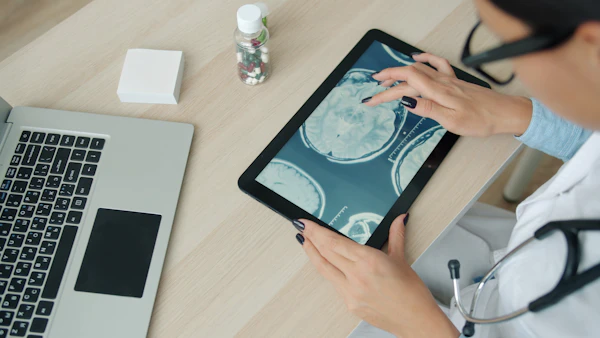
In practical terms, this means AI systems analysing medical imaging can work faster, with less data travelling across networks and reduced privacy risks. For time-sensitive applications like identifying sepsis or deteriorating patients, edge computing enabled by 5G could save lives through faster intervention.
Consider a radiology department where AI-assisted diagnostics run on edge servers within the hospital network, with 5G ensuring seamless connectivity to imaging equipment and clinical systems. Radiologists get AI insights instantly, rather than waiting for cloud processing, improving workflow and patient throughput.
Navigating the Challenges Ahead
For all its promise, 5G in healthcare faces real implementation challenges. Coverage remains patchy, particularly in rural areas where health and social care services often struggle most. The infrastructure investment required is substantial, and many NHS trusts and care providers are already stretched financially.
There are also legitimate concerns about cybersecurity. More connected devices create more potential vulnerabilities. Health and social care organisations will need robust security frameworks and the technical expertise to implement them properly.
Perhaps most importantly, we need to ensure 5G-enabled innovations don't widen existing health inequalities. Not every patient has a 5G-compatible device or lives in an area with coverage. As we develop these technologies, equity must be central to implementation planning.
Moving Forward Thoughtfully
5G represents genuine potential for transforming health and social care delivery, but realising that potential requires thoughtful implementation. It's about identifying specific problems where 5G capabilities offer meaningful solutions, rather than deploying technology for its own sake.
For AI and innovation professionals in UK health and social care, now is the time to be experimenting, learning, and building the evidence base for what works. The technology is ready. The question is whether our organisations, systems, and regulatory frameworks can evolve quickly enough to make the most of it.
Related Articles
How we can help
The Ultimate Guide to Marketing Care Technology
Grab the full playbook as a free PDF while you're here.