CASE STUDY:

Dr Stephanie Kuku & Karolina Afors
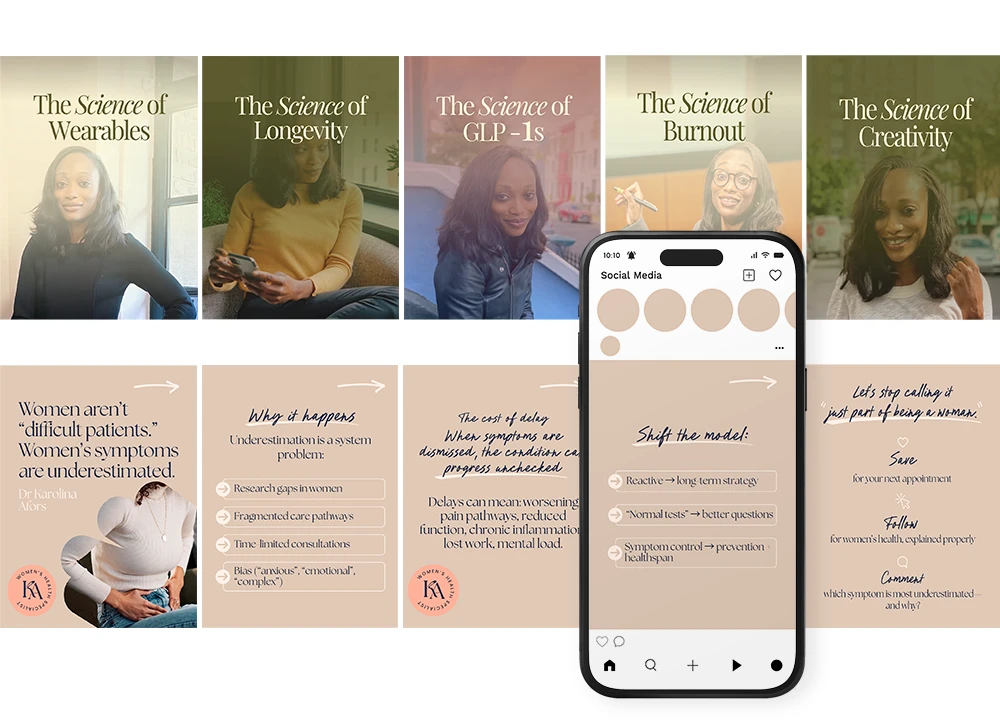
Dr Stephanie Kuku & Karolina Afors, Digital Marketing case study by Blue Cactus Digital

Dr Stephanie Kuku and Karolina Afors are respected clinicians working in women’s health, an area where clear, accurate and sensitive communication is essential. As their public profiles developed, they required professional social media management that could support education, awareness and engagement while maintaining clinical credibility, appropriate boundaries and trust with public audiences.

WHAT WE DID FOR DR STEPHANIE KUKU & KAROLINA AFORS:

We worked closely with both clinicians to manage their social media platforms, providing structure, consistency and strategic oversight. Our approach began with understanding each clinician’s areas of expertise, priorities and preferred tone, ensuring content reflected professional values as well as audience needs. Content planning focused on education, awareness and reassurance. We developed posts that explained key women’s health topics clearly, addressed common questions and misconceptions, and encouraged informed conversation, using language that remained empathetic, inclusive and evidence-led. We also created a consistent content structure that allowed for regular posting without adding pressure to busy clinical schedules. Visual style, messaging and cadence were aligned across platforms, while still preserving each clinician’s individual voice and perspective.

IN CONCLUSION

Strategic social media management has enabled Dr Stephanie Kuku and Karolina Afors to communicate more clearly and consistently about women’s health topics. A thoughtful, professionally managed approach has strengthened engagement, supported education and reinforced trust, allowing both clinicians to maintain confident, credible public profiles while focusing on their clinical work.

Interested in a similar project?

BOOK A PLANNING SESSION
In more detail

Behind the scenes of clinician social media

The challenge

Women's health covers subjects that many people find personal, worrying or hard to ask about. Social media can help them find reliable information. It can also spread confusion very quickly.

Clinicians face extra pressure. Doctors are expected to follow professional guidance on social media, including the General Medical Council's advice on confidentiality and public trust. Every post has to be useful without sounding like individual medical advice. Add a full clinical diary and it is easy to see why consistent posting slips.

Our approach in practice

Projects like this work best when the clinician stays in control of the message and we take care of the structure. In practice, that usually means agreeing a few clear things at the start:

  • Which topics are in scope, and which are better left to a consultation
  • How to word sensitive subjects so they feel respectful and inclusive
  • Who checks clinical content before it goes live
  • How to respond to comments and questions from the public

What changed

The result was a calmer, more dependable presence. Both clinicians now communicate about women's health with more clarity and consistency. Engagement has strengthened, and the content supports education while building trust with the people who follow them.

Just as important, the work no longer competes with patient care. Both clinicians can keep their attention on their clinical practice, knowing their public profiles are managed with care.

What other organisations can learn

This approach applies well beyond individual clinicians. Clinics, charities and care providers face the same balance between being helpful and staying credible.

  • Start with your boundaries. Decide what you will and will not say online.
  • Plan for your busiest weeks, not your quietest ones.
  • Keep each person's voice distinct, even when the look and feel are shared.
  • Never share patient details or stories without proper consent, in line with GDPR.
  • Treat comments as a conversation that needs a plan, not an afterthought.

Frequently asked questions

Do clinicians need to approve every post?

For health content, we strongly recommend it. A simple approval step keeps the information accurate and in the clinician's own words. It can be quick when the topics and tone are agreed up front.

Can social media replace advice from a doctor?

No. Good clinical content explains, reassures and points people towards the right care. It should never try to diagnose or treat individuals online.

How do you handle sensitive questions in the comments?

We agree a clear process in advance. That usually means signposting people to appropriate services, such as their GP or NHS resources, and avoiding personal medical advice in public threads.

Is this service only for clinicians?

No. We use the same careful approach for health and social care providers, care technology companies and charities. Each one needs the right tone, clear boundaries and a posting rhythm the team can sustain.