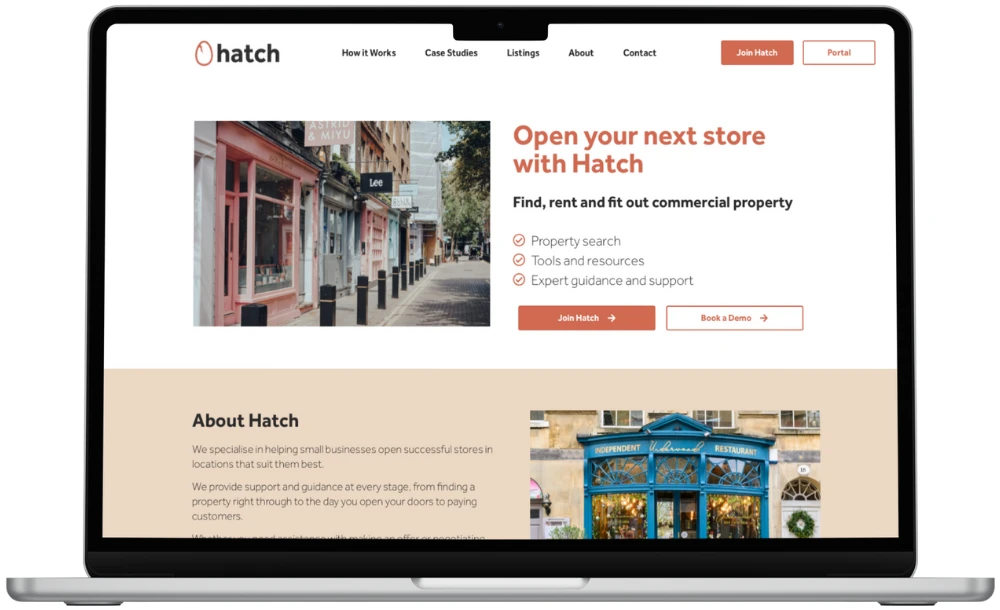
Hatch Retail required a complete redesign and rebuild of its membership-based website to improve performance, usability and scalability. The project focused on creating a streamlined, intuitive platform that supported tiered memberships, search functionality and future growth, while reflecting Hatch’s brand and community-driven ethos.
WHAT WE DID FOR HATCH:
We began with a discovery and planning phase, working hand in hand with the Hatch team to review the existing site, user journeys and technical requirements. This staged approach allowed us to identify what needed to change before moving into wireframes and mockups, ensuring the structure worked for both users and administrators. The website was rebuilt using a custom, optimised framework, with careful migration of existing member data. We implemented enhanced search, membership functionality and a simplified backend to support ongoing content management. Throughout the process, communication remained open and transparent, with regular feedback points built into every stage.
IN CONCLUSION
The finished website delivers a faster, more flexible experience for members and administrators alike, providing Hatch Retail with a platform designed to evolve alongside its community. Strategic website design has created a solid foundation for future growth, supporting engagement, retention and long-term scalability.
Membership sites carry more weight than most. They hold personal data, they treat different people in different ways, and they have to keep working as the community grows. Hatch Retail needed a site that could do all of that without feeling heavy.
The brief was far more than a fresh coat of paint. Performance, usability and scalability all had to improve together, and the site had to stay true to Hatch's community-driven character. That meant balancing what members want to do with what administrators need to manage.
Our approach
We wanted to understand the existing site before touching a design, so discovery came first. Structure and visuals followed, once we knew what had to change.
Reviewing the journeys members and administrators take most often
Agreeing how each membership tier should behave
Planning the migration of existing member data so nobody starts from scratch
Reviewing wireframes and mockups with the Hatch team before development began
What changed
The new site is faster and more flexible for the people who use it and the people who run it. Members get enhanced search and clear membership functionality. Administrators get a simplified backend, which makes ongoing content management easier.
We have not put numbers on this page, and we would rather not guess. For a project like this, success looks like members finding what they need quickly, staying engaged and coming back. It also looks like a team that spends less time wrestling with its own system.
The custom framework matters here too. It gives Hatch room to add features later without starting again.
What other organisations can learn
Whether you run a retail community, a charity membership scheme or a care provider's portal, the same lessons apply.
Do discovery properly. A few weeks of planning can save months of rework.
Treat membership tiers as a system. Decide who sees what before you design a single page.
Plan data migration early. Member records are personal data, so think about GDPR, access and what you really need to keep.
Design the backend with the same care as the front end. If admin is painful, content goes stale.
Build for the next stage, not just launch day.
Frequently asked questions
How long does a membership website rebuild take?
It depends on the number of tiers, the amount of data to migrate and the features you need. We scope this properly in a planning session, so you get a realistic timeline rather than a guess.
Can you move our existing member data safely?
Yes. We plan the migration early, test it and keep GDPR in mind throughout. The aim is that members carry on as normal, with no need to re-register.
Do we need a custom build or an off-the-shelf platform?
It depends on how specific your needs are. Off-the-shelf can work well for simple setups. Custom tends to suit tiered access, tailored search or plans for significant growth.
Will our team be able to update the site ourselves?
That should be the goal. We design the backend around the people who will use it every day, so routine content changes do not need a developer.